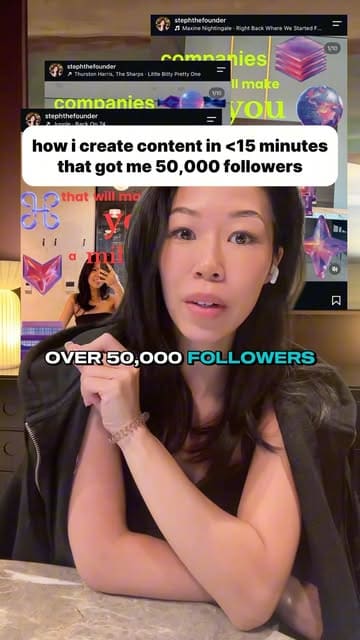
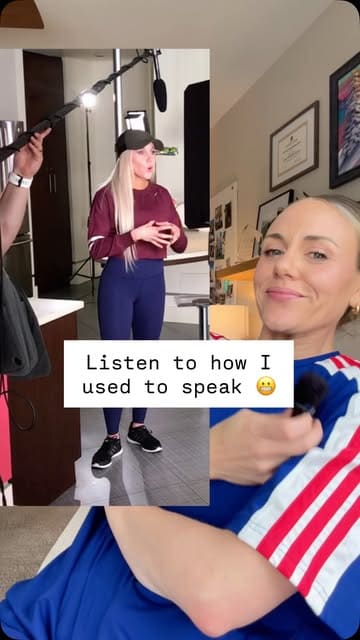
if you also want to become disgustingly well-spoken…what’s good homie 🤝 be patient with yourself. devote yourself to the journey. it’s fun when you let go & see it as a form of play & expression. “if a post flops: good. im just getting started” “im not fragile enough to stop” “you can’t compete w/ someone who’s having fun” ^ that’s the energy. If this is of any interest..comment YAP to get the link to drop your email on the waitlist for my “how-to yap on camera for social media” challenge.
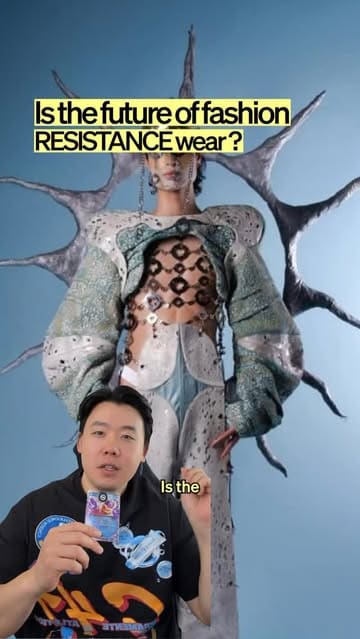
We’re living in some truly crazy times in almost every domain of life.. it feels like a struggle. But out of struggle and opposition comes…opportunity. Idk if that’s too capitalist-optimo-bro but… we’re starting to see it already. Resistance is its own category. Resistance against govt, climate, ai, surveillance, obesity, plastic. Whats next?
Yaaaaaaadilah @jimmyjack08. They were supposed to not let me think about him isssssss 🤣🤣🤣🤣 I’m having way too much fun with these. I just gotta sport the necklace. I love em ❤️❤️ shirt from @nava.joedesigns! I also love his shirts! I need to see if he has anymore designs.
It may feel uncomfortable, especially for us non-confrontational people-pleasers, but learning to negotiate is an essential life skill that truly pays dividends. It never hurts to ask! (Apologies for the damp hair)
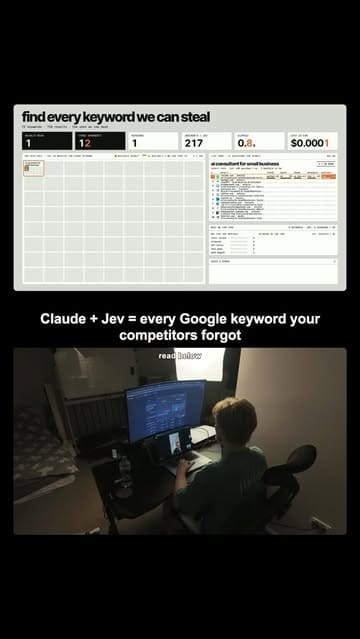
Comment “BOARD” and I’ll send you the guide. Most AI advisory boards are one model doing four impressions. You put Naval, Hormozi and Musk in the same chat. So “Hormozi” can already see what “Naval” just said. The disagreement looks real, but it’s still one context doing voices. That’s not a board. It’s a puppeteer. I rebuilt mine properly. Four layers. Agents are the advisors. Each one is a separate Claude Code subagent with its own context window, its own brief and its own source folder.
Your customers don’t care about your business. They care about their problems. Make your content about them and suddenly they have a reason to watch. ✨
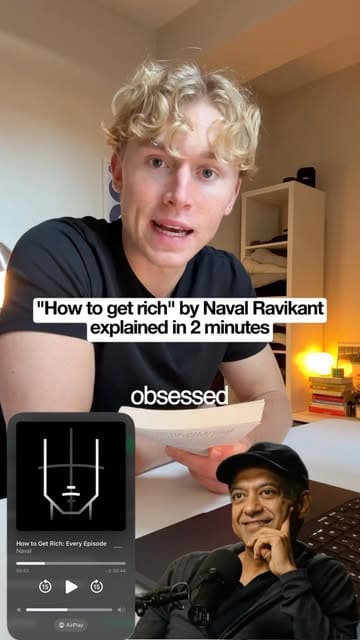
Naval Ravikant's two-word survival plan for the AI era: productize yourself. AI makes generic work cheap. What it can't copy is your specific mix of experience, taste, and obsession. Look at the builders who got there first. Brian Chesky turned design school taste into Airbnb. Palmer Luckey turned a teenage VR obsession into Oculus and Anduril. Melanie Perkins turned outsider design expertise into Canva. None of them competed on being the best generalist. They each scaled one combination nobo
The National Design Studio is doing remarkable work for America. I can hardly believe our government is now capable of building such modern and cutting edge digital experiences. It is extremely rare for people as accomplished, wealthy and talented as Joe Gebbia to leave the private sector to work for the public. I love this story. I hope it inspires more people who’ve built extraordinary companies to help build a country where others get that same chance.
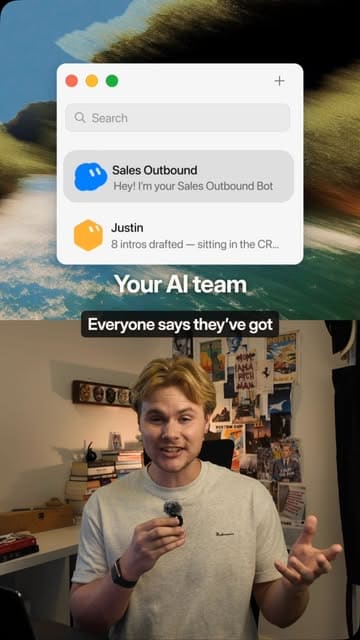
I’m trying to make the most of living in SF without spending all my time planning things. I’ve been using @grok to find events, handle registrations, prep me for plans, and even take care of groceries when my schedule gets busy. It’s been really nice having one less thing to think about. Comment “Bot” and I’ll DM you the templates for the Grok Bots featured in this video.
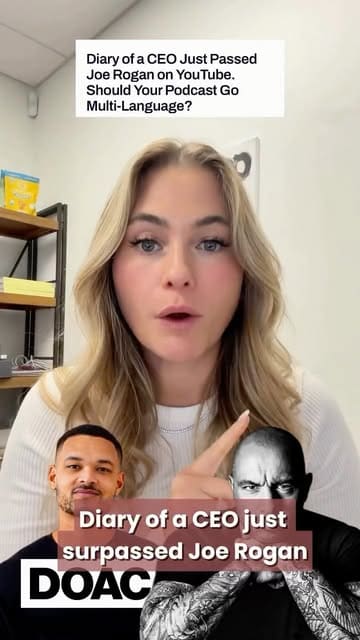
The @thediaryofaceopodcast is on track to make $60M this year. Here are 6 lessons your brand needs to take from their playbook. Follow & Comment MEDIA, and I’ll send you the full case study.
Subvocal, founded by 2 Georgia Tech students and backed by Afore Capital and Y Combinator, makes glasses that read the tiny muscle signals in your jaw, tongue and throat when you mouth words silently. No cameras, no microphones. The company claims 200+ words a minute. Then developer Joe Blau posted a demo rebuilding a version of it with AirPods in 9 minutes. Meta, Apple and Google all want you wearing glasses, and input is the hardest problem to solve. But when Big Tech and a solo dev can move
Comment “BOARD” and I’ll send you the three skills and the voice setup 👇 My board of advisors used to type. Now they argue. Three Claude skills. Hormozi, Rubin, Naval. Each trained on their entire body of work, each reading my knowledge base. I ran all three through Fish Audio’s S2.1 Pro and built three original voices in Voice Design. Not their real voices. Originals. Now I ask one question and get three positions in eleven seconds. In text I’d still be scrolling. They’re not three chatbot
Submarines are among the most complex object humans manufacture - each one has over a million individual parts. And @anduril is investing $3.7B over the next decade to build components for them better, faster and on US soil.
HUGE mistake I see creators make that is killing their brand When you try to be a mix between “Logan Paul” and “Alex Hormozi” you just become a diluted version of both of them To stand out and build a memorable brand, the ONLY way is to lean into your most authentic self That’s what Naval means when he said “Escape competition through authenticity” I’m SURE you have opinions lol I’m also SURE you have interests that some people might laugh at and say it’s too “nerdy” or “rough” or what
Block just unveiled Dessa, a speech-to-speech model trained from scratch on human conversation. It listens and talks at the same time, was trained on a single Nvidia rack, and runs on a MacBook Pro. It came from a tiny lab inside Block, built around a Toronto AI startup Square bought in 2020. The year before, that team went viral for a fake Joe Rogan voice. Block could have licensed a voice model. Instead it owns one, so customer data can stay in-house. Some of the biggest would-be customers
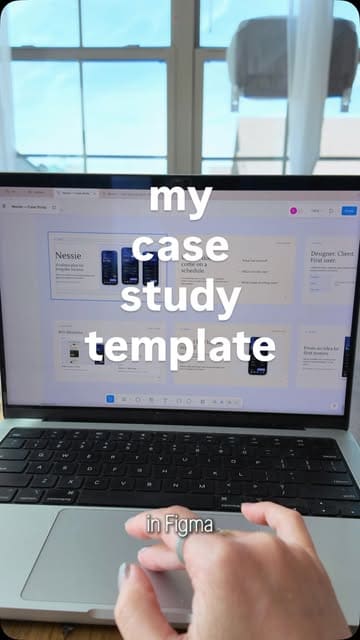
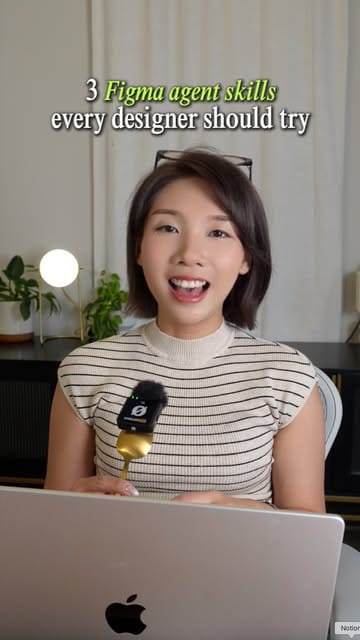
3 Figma agent skills to add to your design workflow 👀 Here are the three I tested in this reel: 1️⃣ Superfuture Design Review by Joey Primiani - @officialjp Reviews your design for hierarchy, typography, spacing, contrast, accessibility, and more, with prioritized suggestions. Super useful as a second opinion! I still decide which suggestions fit the project and the design intent. 2️⃣ Responsive Design by me - @janustiu 🤫 Turns a selected frame into phone, tablet, and desktop layouts using
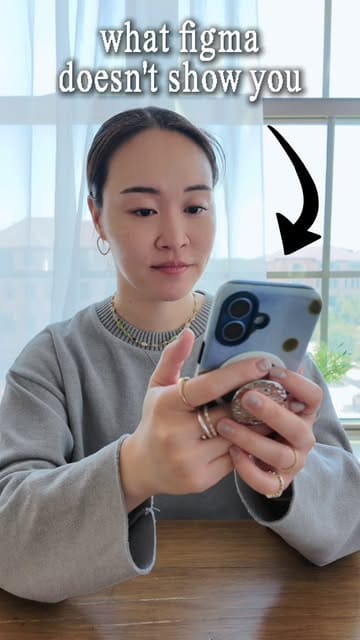
Figma will trick you into thinking your design is done😭 Everything looks great on your monitor. The spacing is clean, the type is readable, the layout makes sense. And then you open it on your phone and it feels completely different! Buttons that looked fine in Figma are suddenly too small to tap comfortably. Text you thought was readable is hard to scan when you are holding the phone at arm’s length. Padding that looked generous on a wide screen feels tight on a smaller one. I don’t catch thes
 BBrand



 Cracked

 Ray-Ban Meta




 Claude



 Grok
 The Diary Of A CEO


 Fish Audio



 Dessa
 Figma